 Site Manager Use Case – Amsterdam Flagship Store & Operations Hub
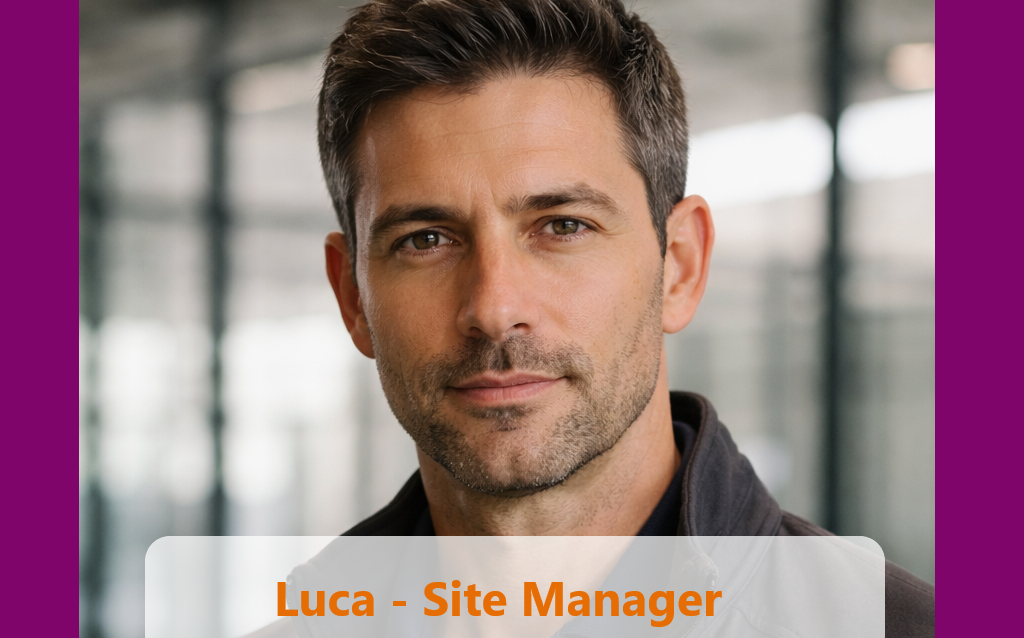
Persona: Luca, Site Manager – Nexus Padel Global, Amsterdam
 Role & Responsibilities
Luca oversees the Nexus Padel flagship retail showroom and operational support hub in Amsterdam. The site combines a high-traffic retail experience with back-office functions like customer service, local marketing, and event coordination.
Amsterdam is a showcase facility for Nexus Padel’s eco-friendly padel gear and a pilot site for new initiatives.
 Challenge
One of their challenges is dealing with initiatives coming from corporate (new projects, system rollouts, process changes) that affect their site. It’s often difficult to know which changes are happening at their site and who or what will be impacted, especially when multiple projects run in parallel.
Luca needs to prepare the site for these changes. In the past, this meant scrambling through emails and meetings to figure out which projects are active or planned for their site and which departments or systems at the site will be affected. Important details could be missed, leading to last-minute surprises on the shop floor.
Nexus Padel is rolling out multiple initiatives that affect Amsterdam simultaneously:
- A new Retail Experience Platform (digital signage, in-store analytics, and mobile checkout)
- A Sustainability Upgrade Project (LED lighting, smart HVAC, and waste tracking)
- A Customer Service Workflow Redesign (new ticketing system and process changes)
Luca is responsible for ensuring these changes don’t disrupt daily operations — but he’s struggling to keep track of what’s happening, when, and who’s involved.
 How MOS Helps
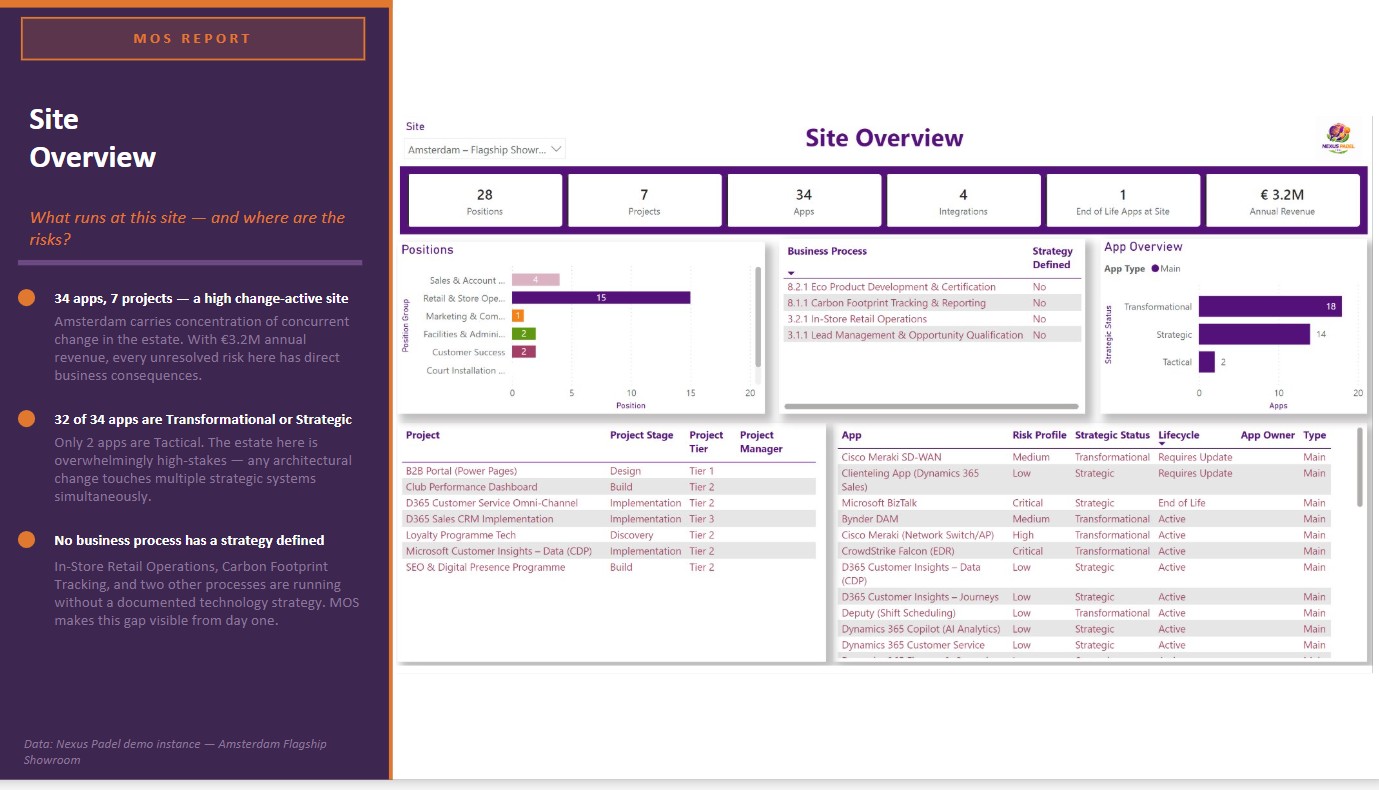
Using MOS, Luca opens the platform and filters the view to their site. Instantly, they see an up-to-date list of all relevant information for that location. For example, how many projects are running at the site and which ones.
MOS answers questions like “Which projects are active for my site?” with a clear display of each project and its scope.
Luca opens MOS and navigates to his Amsterdam site. Instantly, he sees:
- All active and upcoming projects linked to Amsterdam
- Which teams and departments (Retail, Facilities, Customer Service) are impacted by change projects
- Which systems are being used and how much change is active against each system
- Dependencies between projects (e.g., the new ticketing system rollout depends on CRM integration)
He clicks on the “Retail Experience Platform” project and sees:
- Affected systems: POS, in-store tablets, digital signage
- Timeline: Go-live in 3 weeks
- Dependencies: Requires stable Wi-Fi and integration with Nexus Padel’s SAP ERP and Dynamics CRM
- Impacted roles: Floor staff, IT support, store manager
Armed with this information, the Site Manager coordinates with the IT representative and the Project Management Office using a common reference. (In fact, maintaining such data in MOS is a shared responsibility: the Site Manager regularly reviews site details, including project links, in alignment with the PMO rep.) MOS basically becomes the Site Manager’s control tower for change at their location.
With this insight, Luca coordinates with the project leads to stagger training sessions, adjusts shift schedules, and prepares the team for a smooth transition.
 Outcome
- Luca can anticipate on potential disruption of his team and the store operations during rollout
- Staff are trained and informed in advance
- Customer experience remains seamless, or any potential issues for customer experience are anticipated up front and work arounds are prepared.
- Luca and the Amsterdam team are seen as a proactive leaders who keeps the site running smoothly — even during change
 Operationalize
Keeping MOS Relevant: Luca’s Role in System Maintenance & Data Accuracy
As Site Manager, Luca relies on MOS to stay ahead of operational changes at the Amsterdam site. But for MOS to remain a trusted source of truth, it must reflect the current state of the organisation — and that requires active stewardship.
Luca plays a key role in:
- Reviewing and validating site-specific data (e.g., team structures, site capabilities and processes, system usage)
- Flagging outdated or missing information (e.g., retired tools, new equipment, or layout changes)
- Participating in quarterly data refresh cycles with the central operations and IT teams Collaborating with project managers to ensure new initiatives are properly linked to the Amsterdam site in MOS
By contributing to the accuracy of site-level data, Luca ensures that:
- The impact of future changes is assessed correctly
- His team is not caught off guard by overlapping projects or system updates
- Other stakeholders (e.g., IT, Transformation Office, Finance) can make better decisions based on real-world conditions